
How to Rehydrate Dried Mushrooms Properly

A packet of dried mushrooms can turn a simple risotto, broth or noodle bowl into something far more savoury - but only if the mushrooms are brought back properly. Knowing how to rehydrate dried mushrooms gives you tender texture, fuller flavour and a deeply aromatic soaking liquid worth keeping.
Dried mushrooms are concentrated ingredients, not a shortcut to be rushed. A little patience lets the pieces soften evenly and release their earthy character into the water. Whether you are cooking with shiitake, porcini, morels, oyster mushrooms or a mixed woodland blend, the basic method is simple. The details, however, make a noticeable difference on the plate.
How to rehydrate dried mushrooms with hot water
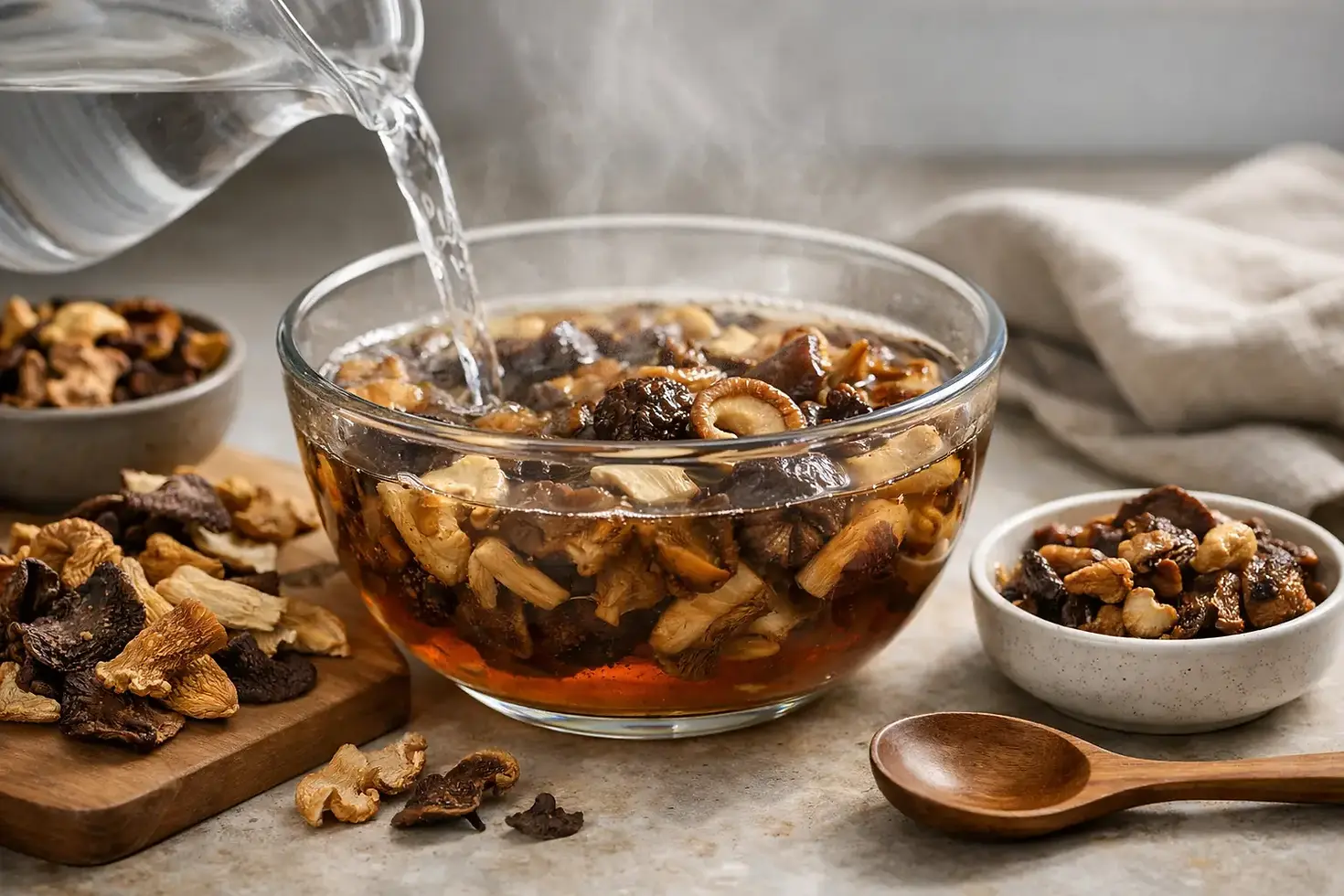
For most dried culinary mushrooms, place them in a heatproof bowl and cover with hot water. Use enough water for the mushrooms to move freely as they expand - roughly two to three times their volume is a useful starting point. Set a small saucer on top if needed to keep lighter pieces submerged.
Use hot water that has just come off the boil, rather than water that is aggressively bubbling in the pan. This is hot enough to soften the mushrooms and draw out flavour without making delicate varieties unnecessarily tough. Leave them to soak for 20 to 30 minutes.
Thicker mushrooms, including whole shiitake caps and substantial porcini pieces, may need 30 to 45 minutes. Morels can be ready sooner, often in 15 to 20 minutes, though their honeycomb shape benefits from a careful rinse afterwards. The exact time depends on the mushroom, its cut and how long it has been dried.
When they are ready, the mushrooms should feel flexible and plump, with no hard or brittle centres. Lift them from the bowl rather than tipping everything through a sieve straight away. This keeps any grit settled at the bottom of the soaking liquid instead of coating the mushrooms again.
Choose the soaking temperature for the dish
Hot water is the everyday choice because it is quick, practical and effective. It suits sauces, stews, soups, gravies and rice dishes where the mushrooms will continue cooking after soaking.
Warm water is a good middle ground for mushrooms you want to keep slightly more delicate. It may take 30 to 45 minutes, but it can preserve a gentler texture in fine slices or tender varieties.
Cold water works too, especially if you have time. Cover the mushrooms and leave them in the fridge for several hours or overnight. This slower method can produce an especially even texture, and it is useful when you are preparing ahead. The trade-off is simple: cold soaking is not for a last-minute supper.
Avoid soaking dried mushrooms in boiling water for long periods. Very high heat can make some varieties firmer or rubbery, particularly if they are then cooked again at high heat. It also pushes more flavour into the liquid, which is excellent for stock but can leave the mushrooms themselves less expressive.
Do not throw away the mushroom liquid
The dark, fragrant liquid left in the bowl is one of the best reasons to cook with dried mushrooms. It carries savoury depth that fresh mushrooms cannot provide in quite the same way. Use it in risotto, lentil dishes, soups, ramen-style broths, pan sauces or a mushroom gravy.
There is one important step: strain it carefully. Dried mushrooms can hold fine grit from the forest floor, especially porcini and morels. Pour the liquid slowly through a fine sieve lined with a coffee filter, clean muslin or a piece of kitchen paper. Stop before the cloudy sediment at the bottom reaches the filter, or discard that final spoonful.
Taste the liquid before adding it to your dish. Its intensity varies widely. A porcini soak can be rich enough to use like a concentrated stock, while a lighter mushroom may need pairing with vegetable stock, miso or herbs. If the liquid tastes overly strong, dilute it rather than letting it dominate every other ingredient.
Prepare the mushrooms before cooking
Once rehydrated, gently squeeze excess water from the mushrooms. Do not wring them hard - you want them moist, not crushed. Check the stems of shiitake, as they can remain woody even after soaking. Remove and reserve them for stock, or discard them if they are too tough to eat.
For morels, cut larger pieces in half lengthways and rinse their folds well. For porcini or mixed mushrooms, a quick inspection is usually enough. Slice or chop according to the recipe, keeping in mind that dried mushrooms have a more concentrated presence than fresh ones.
Rehydrated mushrooms still benefit from cooking. Add them to a hot pan with oil or butter and cook until their surface has taken on a little colour and the moisture has reduced. This step deepens their flavour and helps them sit naturally alongside fresh vegetables, grains and proteins.
If you are adding them to a long-cooked stew or soup, they can go in once softened. For a risotto, sauté them with the aromatics or stir them in partway through cooking. In a sauce, fry them briefly before adding the strained soaking liquid, cream, tomatoes or stock.
Soaking times by mushroom type
There is no single timer for every dried mushroom. Use texture as your guide, but these ranges are reliable for everyday cooking.
Shiitake: 30 to 45 minutes in hot water, or overnight in cold water for a particularly even result.
Porcini: 20 to 30 minutes in hot water. Strain the liquid with extra care because grit is common.
Morels: 15 to 25 minutes in warm or hot water, followed by a thorough rinse of their hollow folds.
Oyster mushrooms: 15 to 20 minutes in hot water. They are often thin and rehydrate quickly.
Mixed wild mushrooms: 20 to 40 minutes, depending on the size and density of the pieces.
If you are using mushrooms in a blended soup, stuffing or sauce, a slightly softer result is fine. If they are the feature of the dish, such as in a pasta or stir-fry, stop soaking as soon as they are tender so they retain some bite.
Common mistakes that flatten the flavour
The most common mistake is using too little water. Mushrooms need room to expand, and crowded pieces hydrate unevenly. A wide bowl is better than a narrow mug for anything more than a small handful.
Another is skipping the strained liquid. Unless it tastes unpleasantly bitter or has obvious grit throughout, it is a valuable cooking ingredient. Treat it as a flavour base, not waste.
Do not assume every dried mushroom needs the same treatment. Paper-thin slices may be ready in minutes, while whole caps need time. Check one piece before draining the bowl. If the centre is still firm, give it another 10 minutes.
Finally, do not use rehydration to disguise poor storage. Dried mushrooms should smell clean, earthy and pleasantly woody. If they smell musty, sour or stale, or show signs of moisture damage, they are not worth cooking. Store good-quality dried mushrooms in an airtight container away from heat and direct light to protect their flavour between meals.
Build dried mushrooms into everyday meals
Dried mushrooms are particularly useful when fresh mushrooms are not on hand, but their value goes beyond convenience. Keep a small jar near your grains and pulses, and you have a fast route to a more satisfying meal. A few soaked shiitake slices can enrich miso broth; porcini can lift a basic mushroom sauce; mixed wild mushrooms can turn a tray of roasted roots into a proper cold-weather supper.
For an easy weekday base, sauté rehydrated mushrooms with shallot, garlic and thyme. Add a splash of the strained soaking liquid, then fold through cooked lentils, brown rice or pasta. Finish with lemon, black pepper and a little olive oil. The contrast of earthy mushroom and bright acidity keeps the dish balanced.
Dried mushrooms also work well alongside functional mushroom routines. Culinary mushrooms are first and foremost food, while powders and drink blends offer a convenient way to bring selected mushroom varieties into coffees, smoothies and daily rituals. Both formats have a place in a considered kitchen: one builds flavour in the pan, the other fits the rhythm of the day.
The next time you open a bag of quality dried mushrooms, give them enough water, enough time and a proper final sauté. That small bit of care is what turns an ingredient from the cupboard into the part of the meal everyone remembers.


Comments