
How to Cook Dried Shiitake for Deep Flavour

Dried shiitake are one of the simplest ways to bring a deep, savoury mushroom character to everyday cooking. Once you know how to cook dried shiitake properly, a small handful can transform a plain broth, a bowl of rice or a quick noodle supper into something far more satisfying.
Their concentrated flavour is the point. Drying intensifies shiitake's natural umami, which means they hold their own alongside ginger, miso, soy, garlic, sesame and rich vegetable stocks. They are a practical cupboard ingredient for plant-forward meals, but they work just as well with chicken, fish and eggs.
How to cook dried shiitake: start by soaking
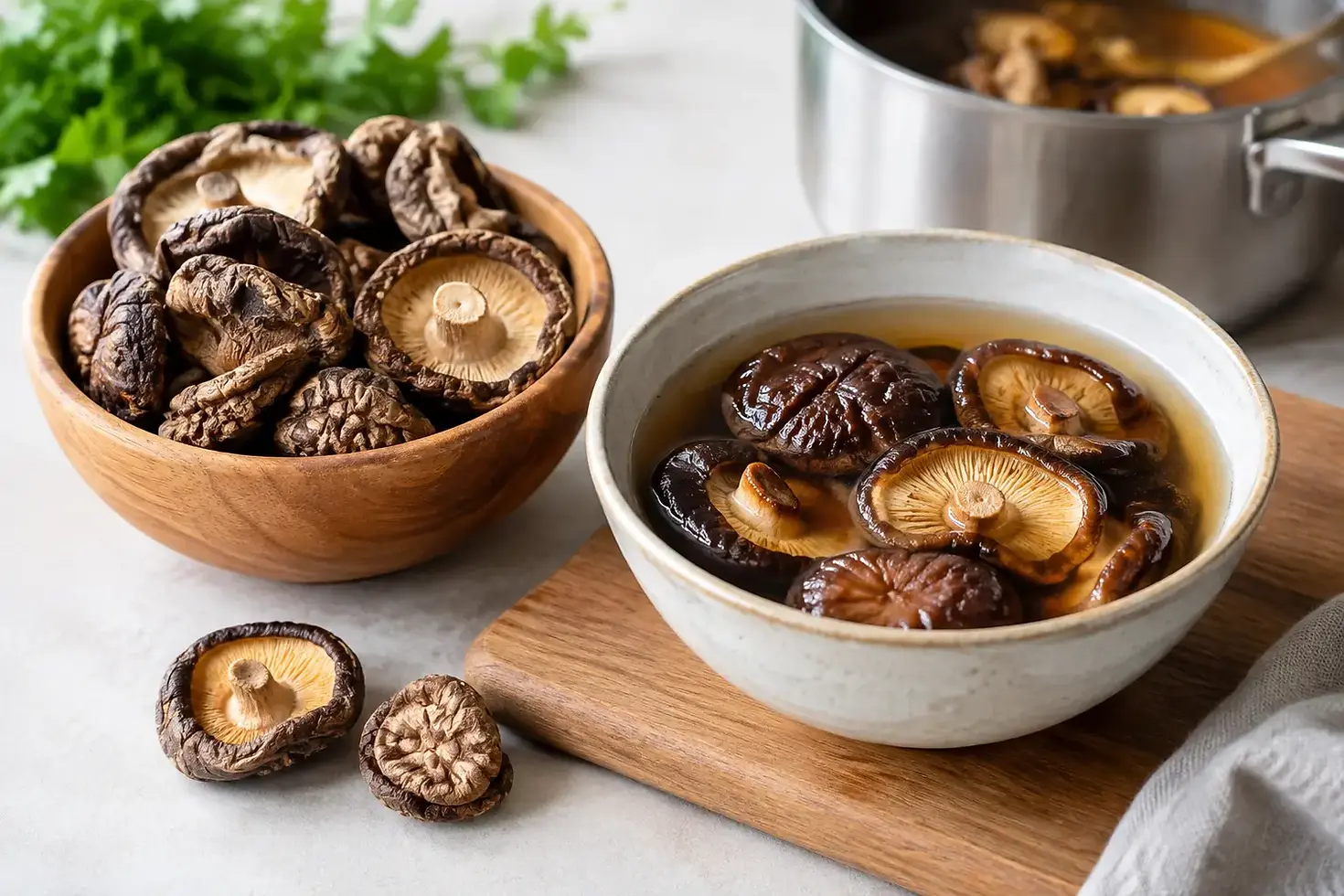
Dried shiitake need to be rehydrated before they go into most dishes. Put the mushrooms in a heatproof bowl and cover them with freshly boiled water. Use a small plate or saucer to keep them submerged, as shiitake often float at first.
For a quick soak, leave them for 20 to 30 minutes in hot water. This works well when you are making a stir-fry, fried rice or a fast soup. For the fullest flavour and a softer, more even texture, cover them with cold water and leave them in the fridge overnight. Slow soaking takes more planning, but it creates an especially flavourful soaking liquid and gives thick caps time to plump up properly.
There is no need to discard that liquid. It is a useful mushroom stock, full of colour and savoury depth. Pour it through a fine sieve, coffee filter or clean muslin first, as dried mushrooms can carry a little grit from processing. Keep it for soups, congee, sauces, gravy, braised dishes or the cooking water for rice.
If you are using a large amount of shiitake, soak them in enough water that you will have extra broth left over. It is an easy way to build flavour without relying heavily on stock cubes or added salt.
Prepare the caps and stems
Once soaked, lift the shiitake from the liquid and gently squeeze out excess water. Do not squeeze them completely dry, especially if they are going into a soup or braise. A little moisture helps them stay tender.
The caps are ready to slice, halve or leave whole, depending on the dish. Small shiitake can be used whole in broths and noodle bowls; larger caps are better sliced for rice dishes, sauces and stir-fries.
The stems are edible, but they are often firmer and woodier than the caps. If the stems feel tough, twist or cut them off. Save them rather than binning them: simmer them in stock, then remove before serving. They add extra mushroom flavour without affecting the final texture. Softer stems can be finely chopped and cooked alongside the caps.
A useful rule is to taste the texture after soaking. Some dried shiitake are thin and delicate; others are thick, meaty caps that need longer soaking and a longer cook. Quality mushrooms should smell earthy and clean, not stale or musty.
Cook them for the dish you are making
Rehydrating is the first stage, not always the final one. Shiitake taste best when they are cooked with the other ingredients, allowing them to absorb seasoning and release their flavour into the pan.
For soups, ramen and broths
Add soaked shiitake and strained soaking liquid to the pot early enough for the flavours to mingle. For a simple mushroom broth, simmer the mushrooms with ginger, garlic, spring onions and a little tamari or soy sauce for 15 to 20 minutes. Add noodles, greens and tofu near the end.
If you are making a lighter broth, use some soaking liquid rather than all of it. Its flavour can be surprisingly concentrated, and the right amount depends on the number of mushrooms, their size and the rest of your seasoning. Taste before adding extra salt.
For stir-fries and fried rice
Slice soaked shiitake fairly thinly, then fry them in a hot pan with oil until the edges begin to colour. Their surface will not become crisp in the same way as fresh mushrooms because they have been rehydrated, but a few minutes of high heat gives them a more rounded, savoury finish.
Add garlic, ginger or chilli after the mushrooms have started to fry, then finish with soy sauce, sesame oil or a splash of the soaking liquid. In fried rice, cook the shiitake before adding the rice so they have space in the pan and do not steam.
For rice, grains and congee
Dried shiitake are excellent with rice because the mushroom liquid seasons the grains from the inside. Add sliced soaked mushrooms and strained soaking water to a rice cooker or saucepan, replacing part of the usual water. A little soy sauce, sake or mirin suits a Japanese-inspired dish, while ginger and sesame work beautifully for a more flexible weeknight bowl.
For congee, add whole or sliced shiitake at the beginning so they become deeply tender as the rice cooks. Finish with fresh herbs, chilli oil, soft egg or shredded chicken if you eat it.
For braises and sauces
Shiitake have enough body for slow-cooked dishes. Add them to a bean stew, lentil ragù, miso-glazed aubergine or a vegetable braise, then use the soaking liquid as part of the cooking stock. They pair particularly well with dark leafy greens, squash, leeks and barley.
For a quick sauce, finely chop the soaked caps and sauté them with shallots and garlic. Add a splash of mushroom liquid, reduce it, then stir through cream, oat cream or blended white beans. The result is rich enough for pasta or mashed potatoes without needing a long list of ingredients.
How much dried shiitake should you use?
A little goes a long way. For two generous portions of soup, noodles or rice, start with four to six medium dried shiitake. For a larger pot of stock or stew, eight to 12 mushrooms will give a stronger mushroom presence.
Using more mushrooms does not always mean a better result. Very concentrated shiitake broth can take over delicate ingredients such as white fish, courgette or mild greens. In those dishes, use fewer mushrooms and dilute the soaking liquid with water or a light vegetable stock. For miso soup, ramen, hearty grains or braised beans, you can be more generous.
A few mistakes worth avoiding
Do not rush very thick shiitake with a short soak if you can avoid it. The outside may feel soft while the centre remains chewy. Give them more time, or simmer them gently in their soaking liquid before adding them to the recipe.
Avoid pouring unstrained soaking water straight into the pan. Even beautifully dried mushrooms can contain fine particles, and nobody wants grit at the bottom of a bowl. Also avoid adding too much salt before tasting. Shiitake broth, soy sauce, miso and stock can quickly stack up.
Finally, do not treat dried shiitake as an exact replacement for fresh mushrooms. Fresh mushrooms bring moisture and a lighter flavour; dried shiitake bring concentration and chew. Use them when you want depth, not necessarily when you need volume.
Keep dried shiitake ready for everyday cooking
Store dried shiitake in an airtight container in a cool, dark cupboard. Kept away from heat and moisture, they are a reliable ingredient to have on hand when fresh produce is running low. They make ordinary pantry meals feel more considered, whether you are building a restorative soup or simply improving a midweek bowl of noodles.
Choose whole dried caps when you want the best texture and visual appeal, especially for broths and rice dishes. Sliced shiitake can be a convenient option for sauces, powders and quick cooking. At Meteor Mushrooms, we value dried mushrooms for exactly this kind of practical versatility: real ingredients, concentrated flavour and a place in daily food routines.
The next time a meal tastes flat, reach for a few dried shiitake, save the soaking liquid and let them do the quiet work of making the whole dish taste more complete.


Comments