
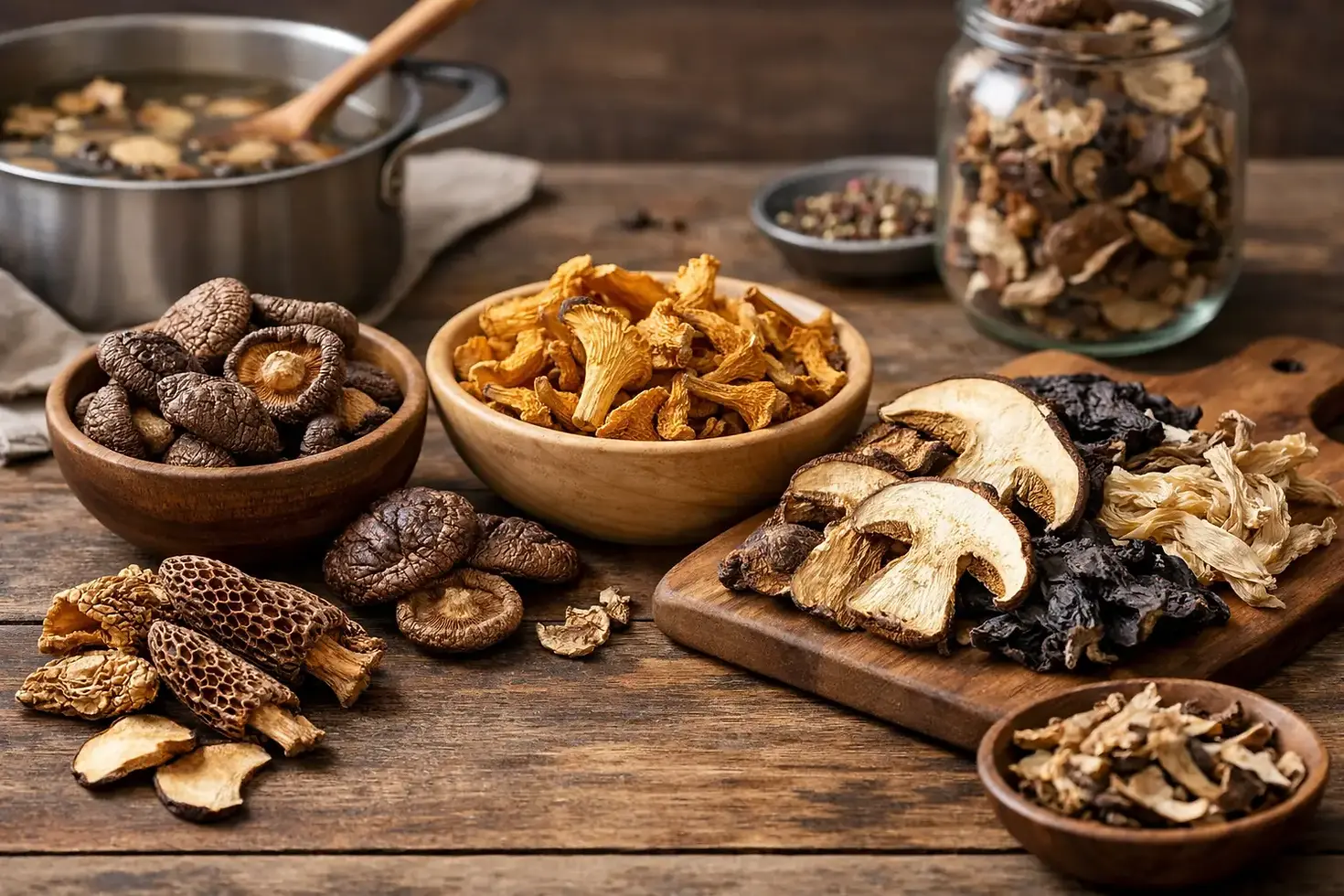
7 Top Dried Mushrooms for Soups to Keep Handy

A good soup rarely needs much once the base is right. The top dried mushrooms for soups bring concentrated savouriness, earthy depth and a proper long-cooked character to a pan in minutes. Keep a few varieties in the cupboard and an ordinary vegetable soup, broth or bean stew can taste far more considered without relying on heavy cream or excess salt.
Dried mushrooms are especially useful for everyday cooking because they work in two ways. The mushrooms become tender, flavourful ingredients, while their soaking liquid becomes a dark, aromatic stock. That makes a small handful go a long way.
Why dried mushrooms make soup better
Drying removes water but leaves behind much of a mushroom's distinctive flavour. When rehydrated, dried mushrooms release glutamates and aromatic compounds into the cooking liquid, creating the savoury, rounded taste often described as umami. It is the reason a simple lentil soup can suddenly taste fuller, or why a vegetable broth gains depth without meat.
The trade-off is that dried mushrooms are not all interchangeable. Some are best used as a background note, while others deserve to be the main ingredient. A bold porcini can dominate a delicate spring vegetable soup; a mild wood ear can disappear if it is added to a heavily spiced curry broth. Choosing by flavour, texture and the rest of the pan matters more than choosing the most expensive variety.
7 top dried mushrooms for soups
1. Porcini for deep, woodland flavour
Porcini are the classic choice when you want a rich, almost meaty mushroom character. Their soaking liquid is dark and powerful, making it ideal for barley soup, bean soups, wild rice dishes, potato soup and slow-simmered vegetable stews. The mushrooms themselves have a tender, substantial bite once rehydrated.
Use porcini with a light hand in clear broths. A few pieces can add complexity; a large handful can turn the whole pot dark and intensely earthy. They pair particularly well with thyme, garlic, leek, chestnut and root vegetables.
2. Shiitake for savoury, balanced broth
Dried shiitake are one of the most versatile cupboard mushrooms. Their flavour is savoury and gently smoky, with enough depth to strengthen broth without taking over. They suit miso soup, noodle bowls, congee, ramen-style stock, chicken soup and vegetable soups with cabbage or greens.
Remove the tough stems after soaking, as they can stay woody. The caps can be sliced and returned to the soup, while the stems can simmer in stock and be discarded later. For a cleaner broth, strain the soaking liquid through a fine sieve before adding it to the pan.
3. Morels for a special-occasion bowl
Morels have a honeycombed cap, a delicate texture and a distinctive nutty, wooded flavour. They are not the mushroom to bury under strong chilli, smoked paprika or a lot of tomato. Instead, let them lead in a creamy cauliflower soup, a light chicken broth or a silky soup finished with herbs.
Because their shape can hold grit, rinse and inspect morels carefully after soaking. They cost more than everyday shiitake or porcini, so treat them as a finishing ingredient or build a smaller, more focused soup around them. A little goes a long way.
4. Chanterelles for peppery brightness
Dried chanterelles bring a gentle fruitiness and peppery edge that lifts creamy or vegetable-led soups. They work beautifully with sweetcorn, squash, potato, leek and tarragon. Their flavour is lighter than porcini, so they are a good choice when you want mushroom character without the sense of a dark stew.
Chanterelles can soften considerably in liquid. Add them to the soup after rehydrating, rather than cooking them for an hour, if you want their flavour and texture to remain noticeable. Their soaking water is useful too, although it is usually more delicate than porcini liquid.
5. Oyster mushrooms for mild everyday cooking
Dried oyster mushrooms are mild, adaptable and easy to use in soups where other ingredients should still have room to speak. Think ginger and spring onion broths, noodle soups, tofu soups, lentils or a simple vegetable potage. They bring a soft, slightly sweet mushroom note and a pleasant chew.
They are a practical option for people who find stronger wild mushrooms too intense. Use oyster mushrooms alongside shiitake when you want a more layered broth: shiitake supplies savouriness, while oyster mushrooms add body and texture.
6. Wood ear for texture in broths
Wood ear mushrooms are valued less for strong flavour and more for their crisp, springy texture. Once rehydrated, they retain a satisfying bite that makes clear soups and Asian-inspired broths more interesting. They are especially good with ginger, garlic, sesame, tofu, noodles and leafy greens.
Do not expect wood ear to make your stock taste deeply mushroomy. Pair it with shiitake, dried stock mushrooms or a well-seasoned vegetable broth for more depth. Their neutral flavour makes them useful when you want texture without changing the direction of the recipe.
7. Maitake for a rich, rustic soup
Maitake, also known as hen of the woods, has a savoury, earthy flavour and feathery pieces that absorb soup beautifully. It is a strong fit for miso-based soups, mushroom and barley pots, hearty vegetable stews and broths with soba or rice noodles. Its flavour sits between the force of porcini and the familiar savouriness of shiitake.
For wellness-minded cooks, maitake is also a welcome way to bring functional mushrooms into proper food rather than keeping every mushroom routine confined to a drink or powder. The key is still flavour first: let it support the bowl, not turn dinner into a supplement project.
How to prepare dried mushrooms for soup
Place the mushrooms in a heatproof bowl and cover with just-boiled water. A small handful usually needs 15 to 30 minutes, though larger or thicker mushrooms may need longer. Press them below the surface with a small plate if they float.
When they are soft, lift the mushrooms out rather than pouring the bowl straight into your soup. Fine grit often settles at the bottom. Strain the soaking liquid through a coffee filter, clean cloth or very fine sieve, leaving the last cloudy spoonful behind. Add this liquid to the soup as part of the stock, tasting as you go.
Chop larger mushrooms into bite-sized pieces before returning them to the pan. If your soup is blended, you can simmer the rehydrated mushrooms with the vegetables and blend everything together. For a clearer soup, slice them neatly and add them towards the end.
Build flavour without overdoing it
The strongest soup is not necessarily the best one. Start with one main dried mushroom and use supporting ingredients that suit it. Porcini likes rosemary, thyme and beans. Shiitake responds well to ginger, miso and spring onions. Chanterelle suits butter, leek and fresh herbs. Maitake works naturally with barley, miso and roasted squash.
Salt late. Dried mushrooms and their soaking liquid can make a broth taste more savoury before it is actually seasoned, especially if you are also using miso, stock cubes or tamari. Let the soup simmer, then adjust salt and acidity at the end with lemon, cider vinegar or a splash of rice vinegar where it fits.
A small amount of dried mushroom powder can also sharpen the background flavour of a soup when you do not need visible pieces. It is particularly useful in blended soups, gravies and quick weekday broths. At Meteor Mushrooms, the appeal of dried mushrooms is exactly that flexibility: whole pieces for texture, powders for convenience, and plenty of room to make the flavour your own.
Store them for better soup on demand
Keep dried mushrooms in an airtight jar or sealed pouch away from heat, moisture and direct light. They should smell clean, earthy and concentrated, never damp or musty. Buy quantities you will realistically use, especially with delicate varieties, because freshness shows in the aroma and the quality of the soaking liquid.
For an easy cupboard blend, combine shiitake for savouriness, porcini for depth and wood ear for texture only when you are ready to cook. That way, each soup can have its own direction rather than tasting like the same generic mushroom broth every time.
The best choice is the one that suits the bowl already on your mind. Keep shiitake for reliable weekday broth, porcini for deep winter cooking and one more distinctive variety for when a simple soup deserves a little more character.


Comments