
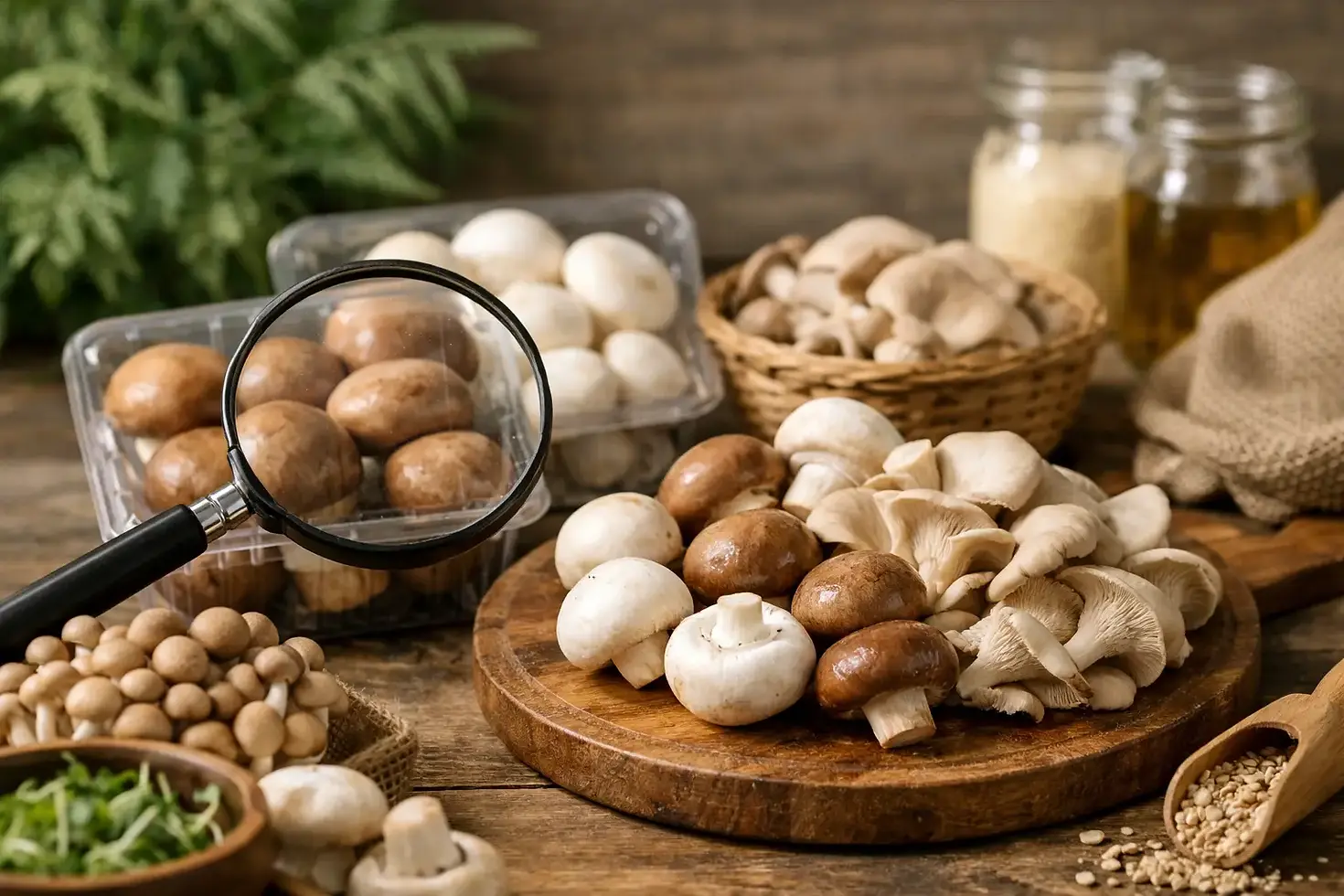
Organic Mushroom Label Guide for Smarter Picks

A mushroom powder can look beautifully simple on the front of the pouch, yet the useful details are usually tucked into the small print. This organic mushroom label guide helps you sort certified products from vague marketing, compare powders with extracts, and choose a format that makes sense for your daily routine.
For shoppers already adding functional mushrooms to coffee, smoothies or tea, a good label is not a bonus. It is how you know what species you are buying, how it was produced and whether the serving actually suits the way you plan to use it.
Start with the organic claim
“Organic” should mean more than earthy packaging, a forest illustration or words such as “clean” and “natural”. On a properly labelled product, look for a recognised organic certification statement or logo, alongside the name of the certifying body where required. The exact mark differs by country and market, but the principle is the same: the claim should be independently verified rather than self-declared.
Organic certification generally covers how the mushrooms are grown and handled, including limits on certain synthetic pesticides and fertilisers. It does not automatically tell you whether a powder is an extract, whether it uses fruiting bodies, or how concentrated the finished product is. Those are separate questions, and they matter just as much.
Be cautious with phrases such as “made with organic mushrooms”. They may be perfectly legitimate, but they do not necessarily mean every ingredient in a drink blend is organic. Turn the pack around and read the full ingredient list and certification wording before assuming the entire product is certified organic.
The organic mushroom label guide: name the mushroom
A quality label should clearly identify the mushroom species. Common names are helpful, but the Latin name gives extra confidence that the product is specific rather than loosely described. For example, lion’s mane is Hericium erinaceus, reishi is Ganoderma lucidum or Ganoderma lingzhi depending on the product, and turkey tail is Trametes versicolor.
This matters because mushroom names can be used broadly in wellness marketing. A product saying only “medicinal mushroom complex” leaves too much unanswered. You should be able to see which mushrooms are included and, ideally, how much of each one you receive per serving.
For a single-mushroom powder, the ingredient panel may be pleasingly short: organic lion’s mane mushroom powder, for instance. For a blend, clarity is even more valuable. If five mushrooms are listed but the total mushroom amount is only 500 mg, each individual mushroom may be present in a relatively modest quantity. That does not make the blend poor - it depends on your preference and intended use - but it makes comparison difficult if amounts are hidden inside a proprietary blend.
Fruiting body, mycelium and growing medium
The next phrase to look for is what part of the fungus was used. Fruiting bodies are the visible mushroom structures most people recognise. Mycelium is the thread-like fungal network that grows through a substrate. Both are genuine parts of a fungus, but they are not interchangeable ingredients and should be labelled honestly.
Fruiting-body powders are made by drying and milling whole mushroom fruiting bodies. They suit people who want a straightforward whole-food format for daily drinks and cooking. Dried mushroom pieces follow the same logic, offering a familiar culinary ingredient with the convenience of a longer shelf life.
Mycelium products can be more complicated. Some are grown on grain or another substrate, and the finished material may contain both mycelium and a meaningful amount of that growing medium. If you are looking specifically for fruiting-body mushroom powder, the label should say so. If you are happy with mycelium, look for a clear explanation of what is included rather than assuming the word “mushroom” answers the question.
There is no universal winner here. The best format depends on whether you want a whole-food powder, a culinary mushroom, or a more concentrated extract. What matters is that the label lets you choose knowingly.
Powder or extract: understand the format
A mushroom powder is usually the whole dried mushroom ground into a fine texture. It is easy to stir into porridge, blend into smoothies, or add to a warm drink. Its label may list the mushroom in grams, which makes practical sense for an everyday food-style serving.
An extract is processed to make particular mushroom compounds more available or concentrated. Labels may mention hot-water extraction, dual extraction, extract ratio, or standardised compounds. These terms can be useful, but they need context.
An extract ratio such as 8:1 suggests that a larger amount of raw material was used to make a smaller amount of extract. It is not a stand-alone quality score. Extraction methods, starting material and final compound testing all affect what that number means. Likewise, a high percentage printed on the front is only useful if the label says what has been measured.
For many functional mushroom shoppers, beta-glucan content is more helpful than generic “polysaccharide” claims. Beta-glucans are naturally occurring compounds found in fungi, while a broad polysaccharide figure can include starches from grain-based growing media. If a product highlights active-compound content, look for specific, transparent language rather than an impressive number with no explanation.
Read the serving size before the headline claim
Front-of-pack claims are designed to catch the eye. Serving size tells you how the product fits into real life. Check whether the stated amount is for one scoop, two capsules, or an entire sachet, then see how many servings are actually in the pack.
With powders, consider whether the serving is realistic for your routine. A one-gram serving can be effortless in coffee; a larger culinary serving may work better in a smoothie or soup. Neither approach is automatically better. The right choice is one you will use consistently and enjoy.
For blends, also check what else is in the scoop. Cacao, coffee, spices and sweeteners can make a mushroom drink more enjoyable, but they change the product’s flavour, nutrition and caffeine content. If you prefer a mushroom-only routine, a single-ingredient powder gives you more control. If you want speed and taste from one mug, a well-made blend may be the better fit.
Ingredients, allergens and the details that affect your day
The ingredient list is where a clean label proves itself. Ideally, every ingredient is recognisable and there for a reason. Fillers, flavours and sweeteners are not automatically a problem, especially in drink blends, but they should be clear enough for you to decide whether they belong in your cupboard.
Check allergen statements carefully, particularly if you avoid gluten, dairy, soy or nuts. Also look for caffeine if you are choosing a coffee-based mushroom blend. “Natural flavour” may be acceptable to some shoppers and a reason to choose a simpler product for others. Your standard matters more than a trend-led label claim.
If you are pregnant, breastfeeding, managing a health condition, or taking prescription medicine, speak with a qualified healthcare professional before adding concentrated mushroom extracts or new supplements to your routine. A product label supports an informed purchase, but it is not individual medical advice.
Origin, traceability and quality signals
Country of origin can be useful, especially for shoppers who care about growing conditions, supply chains and supporting smaller producers. It is not the only measure of quality. A mushroom grown elsewhere can still be excellent if the brand is transparent about sourcing, testing and production.
Look for a batch number and best-before date. These modest details show that a product is being managed as a food or supplement rather than sold as an anonymous commodity. Storage instructions matter too. Powders stay at their best when kept sealed, dry and away from heat, while dried mushrooms benefit from the same basic care.
Testing claims deserve a measured reading. Statements about testing for contaminants can be reassuring, but the strongest brands make it clear what they test for, such as heavy metals or microbiological safety, without turning a label into a wall of jargon. Transparency is more valuable than dramatic promises.
Choose the label that supports your actual routine
The best organic mushroom product is rarely the one with the longest front-label claim. It is the one that tells you plainly what it contains, how much you are taking, and how it was made. Start with verified organic certification, then compare species, mushroom part, format and serving size.
If you want an uncomplicated addition to a morning smoothie, an organic single-mushroom powder may be the natural choice. If you want a quick, flavour-led ritual, a mushroom drink blend can earn its place. If food comes first, dried organic mushrooms bring the category back to the kitchen.
Read the small print once, choose a product you will genuinely reach for, and let the daily cup or meal do the hard work of making the habit stick.


Comments