
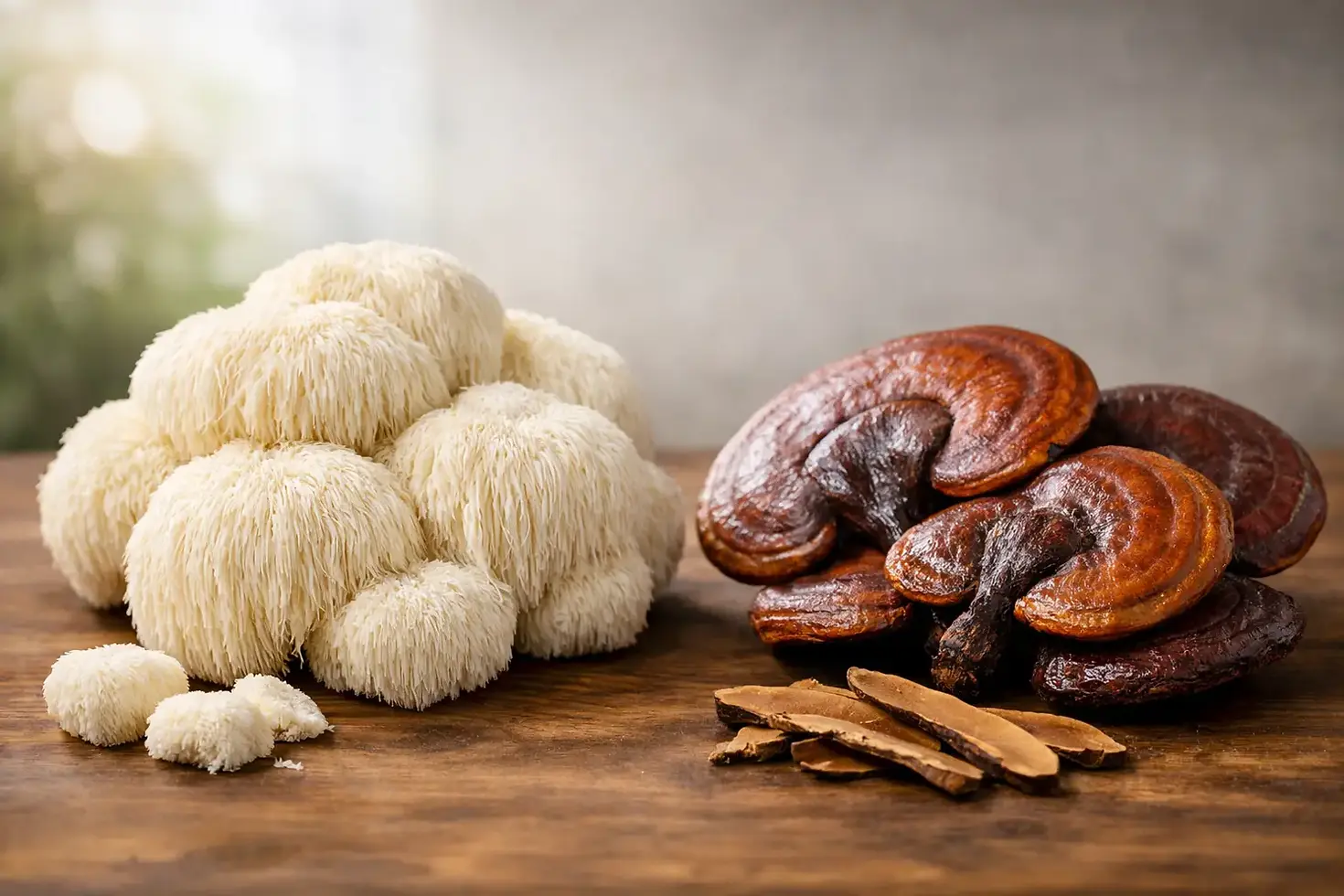
Lion's Mane vs Reishi: Which Fits Best?

Some mushrooms earn a place in your routine fast. If you're weighing lion's mane vs reishi, you're probably not looking for a novelty ingredient - you want something that actually fits how you feel, how you work and what kind of support you want day to day.
These two are among the most used functional mushrooms, but they are rarely chosen for the same reason. Lion's mane is usually the one people reach for when they want support around focus, clarity and mental performance. Reishi tends to appeal more when the goal is balance, rest and a steadier sense of calm. That sounds simple, but the real choice depends on timing, format and what you want from your daily stack.
Lion's mane vs reishi: the core difference
The quickest way to separate them is this: lion's mane is generally associated with the mind, while reishi is more often associated with resilience and restoration.
Lion's mane has built a strong following among people who want a cleaner kind of cognitive support. It is often added to morning coffee, smoothies or nootropic-style blends because it feels aligned with work, study and creative tasks. If your routine revolves around getting mentally switched on without piling on more stimulants, lion's mane usually makes immediate sense.
Reishi sits in a different lane. It is less about mental sharpness in the moment and more about helping support overall wellness in a way that feels grounding. Many people use it in the evening, in tea or a warm drink, because it suits slower rhythms. If your day is already busy, reishi often feels like the mushroom that helps take the edge off rather than push you further forward.
That difference matters because buying the wrong mushroom is often just a timing problem. Someone wanting calm at night may feel underwhelmed by lion's mane, while someone wanting a productive start might not get what they hoped for from reishi alone.
When lion's mane makes more sense
Lion's mane is usually the better fit when your priority is daytime use. It suits people building a routine around work, studying, training their attention or simply trying to feel a bit less foggy by mid-morning.
A lot of regular mushroom customers are not chasing a dramatic effect. They want something steady, easy to use and compatible with habits they already have. That's where lion's mane works well. Powdered formats can drop straight into coffee, oats or a smoothie without turning your routine into a project.
It can also be the more approachable starting point for people new to medicinal mushrooms. The reason is practical rather than trendy. Focus support is easy to understand, and the use case is obvious. Morning drink, busy day, repeat tomorrow.
That said, lion's mane is not a magic productivity switch. If you are under-slept, overstimulated and relying on three coffees before lunch, adding lion's mane will not fix the basics. It works best as part of a solid daily rhythm rather than as a rescue move.
When reishi is the better choice
Reishi tends to suit people who want their mushroom routine to feel more restorative. If your day runs hot, your nervous system feels overworked or you want something that pairs naturally with evening habits, reishi often lands better.
Its reputation in wellness circles comes from that more calming, balancing profile. It is the kind of mushroom people keep nearby for slower rituals - a post-dinner drink, a caffeine-free blend, or a quiet moment before bed. For many customers, that matters as much as the ingredient itself. A product only works long term if you actually want to use it.
Reishi can also be a smart choice if your cupboard is already full of energising supplements. Not everyone needs another input aimed at performance. Sometimes the better addition is the one that supports recovery and helps create more contrast in the day.
The trade-off is that reishi may feel less obviously functional to someone expecting a noticeable mental lift. Its strengths are often more about consistency and routine than immediate sensation.
Lion's mane vs reishi for energy, focus and calm
This is usually where the decision gets made.
For focus, lion's mane is the clearer candidate. It is commonly used by people who want support with concentration and mental clarity, especially in the first half of the day. If you are choosing one mushroom for desk work, creative work or study sessions, lion's mane is often the more targeted option.
For calm, reishi is usually the stronger fit. It is popular with people who want to support a more even mood or create a wind-down ritual that feels supportive rather than sedating. It does not replace sleep, and it is not a shortcut through chronic stress, but it often suits routines built around slowing down.
For energy, the answer is more nuanced. Lion's mane is not a stimulant in the way caffeine is, but people often place it in energising routines because mental clarity can feel like more energy. Reishi is less likely to be chosen for daytime drive, though some people use it daily without feeling sleepy from it. That is where personal response matters.
If your question is really, "What will I feel most clearly?", lion's mane tends to match expectations better for daytime use. If your question is, "What fits the version of wellness I keep neglecting?", reishi often deserves more attention.
Choosing the right format
Format changes everything. A good mushroom product should fit into your day with almost no friction.
Powders are usually the most flexible. Lion's mane powder works naturally in coffee, matcha, protein shakes and breakfast staples. Reishi powder is often better in cacao, herbal tea or evening blends where its earthy bitterness feels more at home. If taste matters to you, that alone may shape your choice.
Drink blends can make the decision even easier because they remove some of the guesswork. If you want a ready-made morning option, lion's mane in a blend with complementary ingredients can be an easy win. If you prefer a calmer evening drink, reishi blends are often the more natural fit.
Dried mushrooms play a different role. They may suit people who like traditional preparation or want a pantry ingredient with broader culinary use, but for everyday wellness support, powders and blends are generally the most convenient option.
This is where specialist brands stand out. Quality, extraction approach and ease of use matter far more than inflated claims on the label. A straightforward, well-made powder you actually use every day is worth more than a complicated product that sits untouched in the cupboard.
Can you take both?
Yes, and plenty of people do. In practice, lion's mane and reishi often complement each other because they serve different parts of the day.
A common approach is lion's mane in the morning and reishi later on. That split feels intuitive. One supports a more switched-on start, the other supports a calmer finish. For customers already comfortable with functional mushrooms, this is often the most sensible route rather than treating it as an either-or decision.
Still, more is not always better. If you are new to mushroom powders, starting with one can make it easier to notice whether it suits you. Once the habit is established, adding a second mushroom is much simpler.
If you already know your main goal, let that lead. Choose lion's mane if your mornings need help. Choose reishi if your evenings do. Choose both if your routine has room for each and you want a more rounded daily set-up.
How to decide without overthinking it
Start with the moment you want support most. That usually gives you the answer faster than reading a long list of mushroom properties.
If you want a mushroom to pair with coffee, work blocks and mental clarity, start with lion's mane. If you want one to pair with quiet evenings, decompression and a more grounded routine, start with reishi. If you already use functional products and want a simple two-part ritual, both can earn their place.
At Meteor Mushrooms, that practical fit matters. The best mushroom is not the one with the loudest reputation. It is the one with the right quality, the right format and a place in your day that feels easy to repeat.
Sometimes the smartest choice is not asking which mushroom is better. It is asking which one belongs in your cup tomorrow morning - and which one belongs in it tonight.


Comments